
Every year, people put themselves in serious danger by trespassing on the railway. Some do it to take shortcuts, retrieve lost items or follow friends, but many enter the railway illegally to commit offences such as graffiti, vandalism and cable theft.
What many people don’t realise is that the consequences can be far greater than they expect. Trespassing on the railway is against the law and can result in arrest, prosecution and a criminal record. Just as importantly, the railway is an extremely dangerous environment where a moment’s decision can lead to life-changing injuries or death.
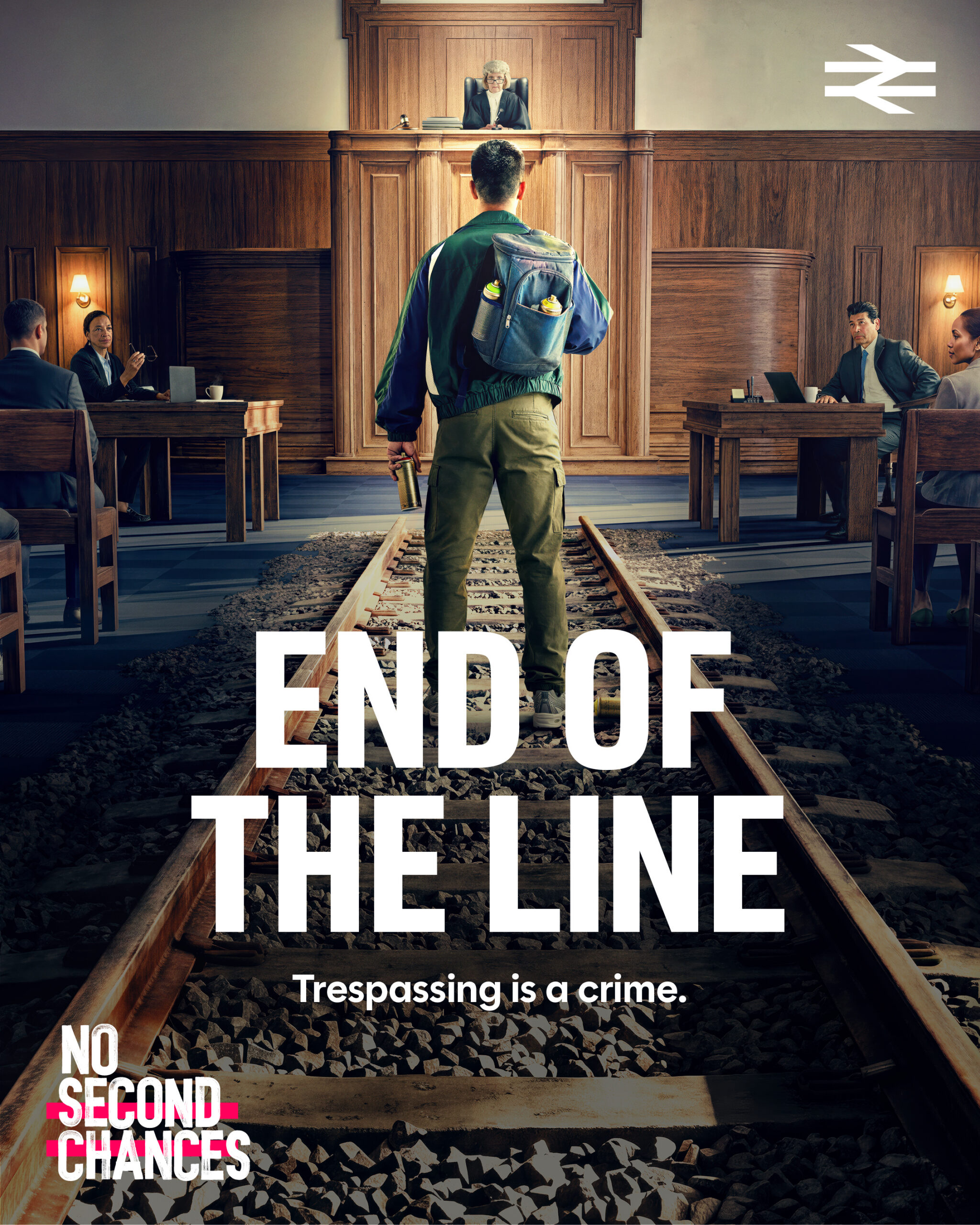
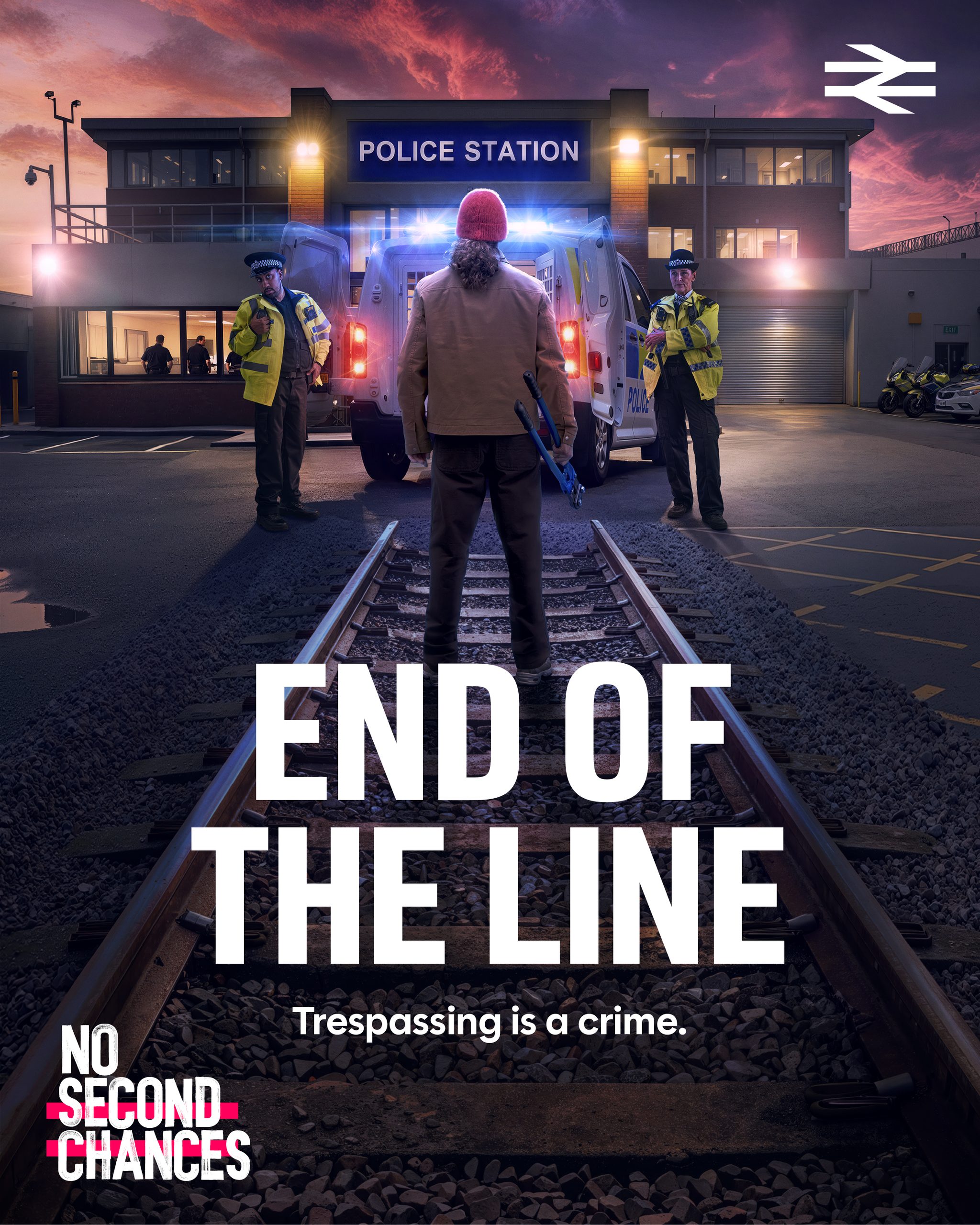
The End of the Line campaign highlights the real consequences of railway crime, encouraging people to think twice before stepping onto the tracks.
FAQs
Railway trespass is entering any part of the railway where the public is not allowed. This can include train tracks, railway bridges, tunnels, embankments, depots and other restricted areas. If there's a fence, gate, warning sign or barrier, it's there for a reason. Crossing it could mean you're trespassing.
Yes. Trespassing on the railway isn't just dangerous, it's against the law. Many people think it's a harmless prank, a shortcut, or something that's unlikely to get them into trouble. In reality, entering the railway without permission is a criminal offence and can lead to enforcement action, prosecution and a criminal record.
Across the railway, technologies such as CCTV, sensors and drones are helping identify trespassers and support investigations. British Transport Police and rail industry teams work together to tackle trespass and prosecute offenders where appropriate. The idea that "nobody gets caught" simply isn't true.
It can. Depending on the offence and outcome, a criminal record could affect future education, employment, travel or other opportunities. What might seem like a quick decision today could have consequences that follow you for years.
The railway is a working environment, not a place for shortcuts, dares or social media content. Trespassing puts people at risk, causes disruption to passengers and can delay trains across the network. It can also have a wider impact on railway staff, emergency responders and local communities. Trespass incidents cost the railway millions of pounds every year and can affect thousands of journeys.
Yes. It doesn't matter whether you're looking for a shortcut, creating content for social media, exploring with friends or trying to get a better photograph. If you enter a restricted part of the railway without permission, you may be committing an offence.
Never put yourself at risk by attempting to intervene. If someone is in immediate danger, call 999. Non-emergency incidents can be reported to British Transport Police by texting 61016.
Always use designated routes such as station footbridges, underpasses, level crossings and public rights of way. The safest place to be is outside the railway boundary.
Remember
End of the line. Trespassing is a crime.
A moment’s decision can have lasting consequences. Whether it’s a shortcut, a challenge for social media, or simply curiosity, entering the railway illegally isn’t worth the risk.
Think twice. Crime has consequences.