
You face many hidden dangers when you meet the railway.
The decisions you make are crucial.
Level crossings
STOP. LOOK. LISTEN.
Is it an authorised crossing?

Level crossings are the only places where the public should cross the railway. They are designed to allow people, cyclists and vehicles to cross safely when used correctly.
Is it familiar?

Every level crossing is different, so it is important to stop, look and listen, follow the signs, and obey any lights, alarms or barriers.
Are you paying attention?

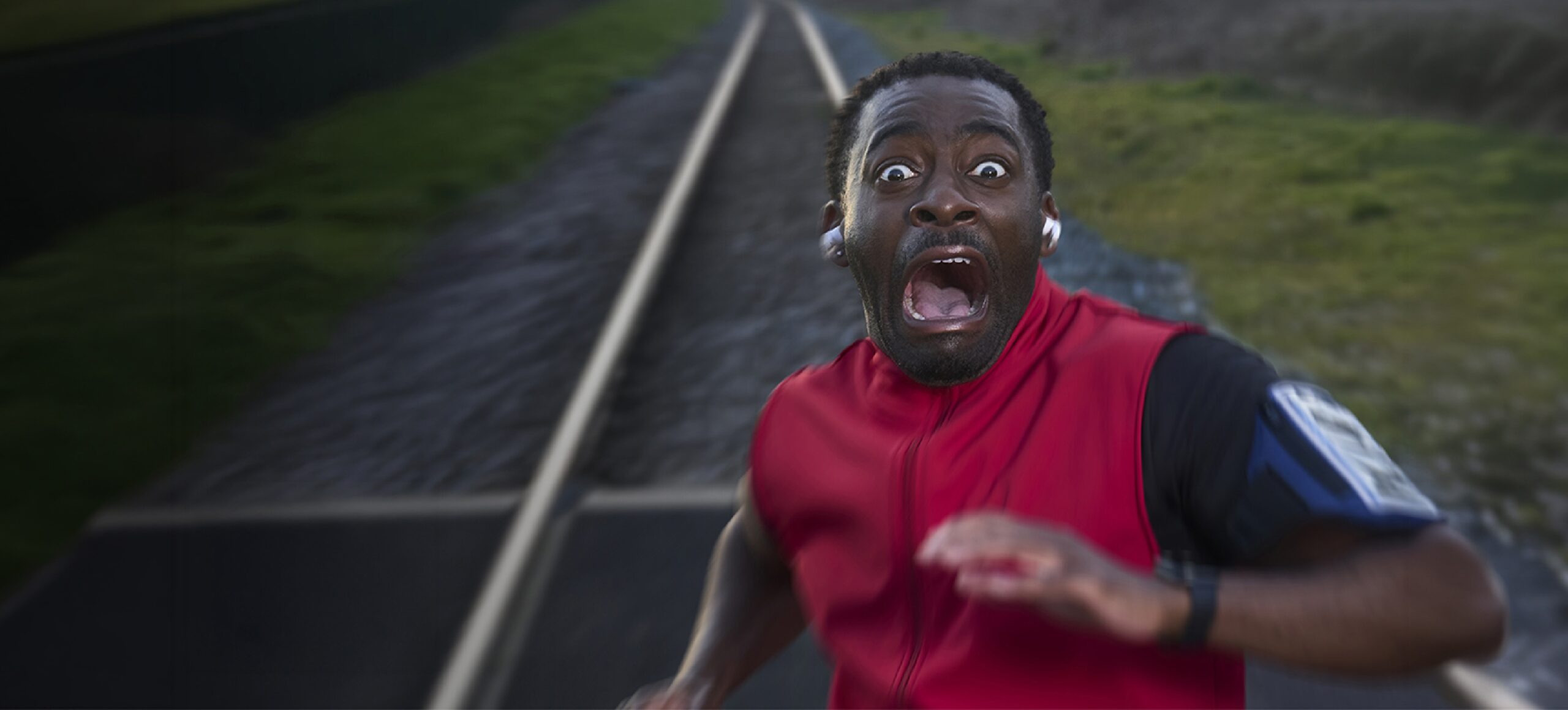
Distraction is one of the biggest risks at level crossings. Looking at a phone, wearing headphones or rushing across can prevent you from noticing warnings or approaching trains. Trains can arrive much sooner than expected, and there may be more than one train approaching from different directions.
Trespassing
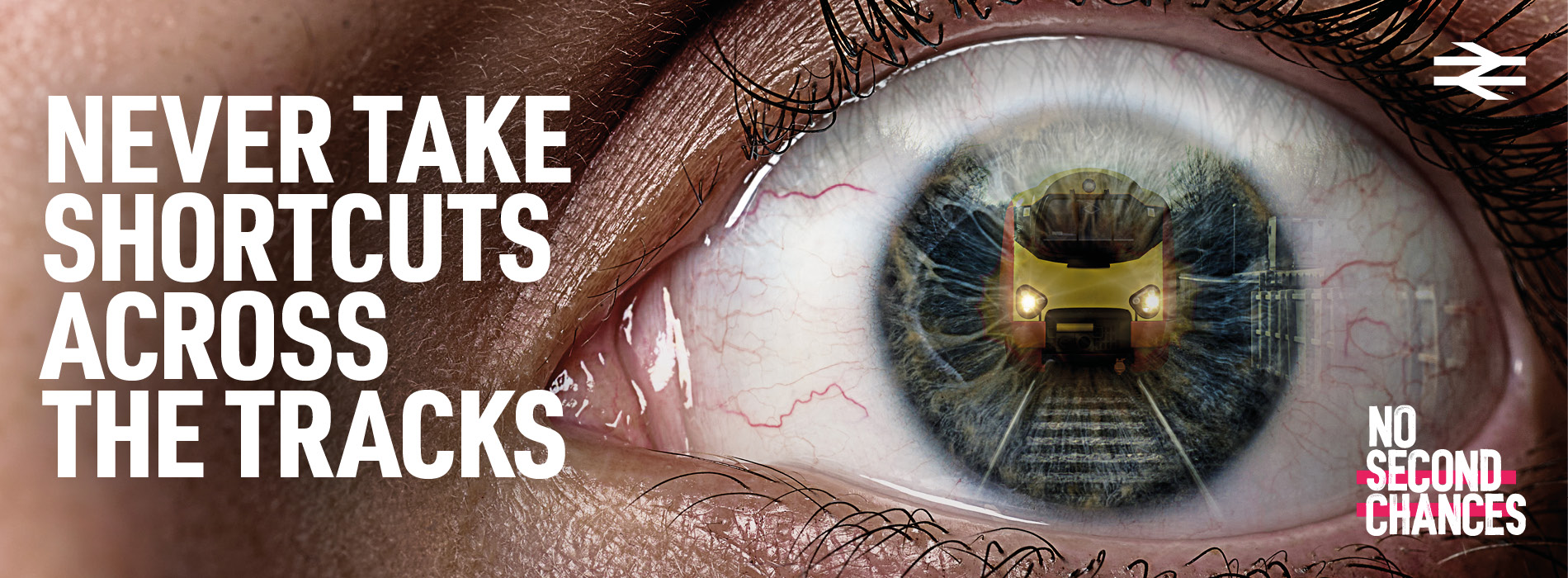
Crossing the railway anywhere other than an authorised crossing is trespassing, it could lead to serious injury or worse.
Trains can travel at 125mph almost silently
Many people mistakenly believe they can enter the railway if no train is visible, but the railway is always operating, and the dangers are always there. Trains can travel faster and quieter than most people expect, you can’t always see or hear them coming.
Electricity
Overhead cables carry 25,000 volts of electricity. You don’t need to touch them for a serious injury to occur – simply being too close can be dangerous.
The electrified rail carries 750 volts – enough to cause horrific burns, life changing injuries or worse.
The electrified rail carries 750 volts – enough to cause horrific burns, life changing injuries or worse.
The impact

There is never a safe way to trespass. It is illegal and can have life-changing consequences for those involved, as well as affecting train services and the wider community. Trains are wider than the rails they run on and can pass closer than people expect. Many rails are powered by strong volts of electricity which can harm you even if you don’t touch the track. Walking near the railway is extremely dangerous.
FAQS
Trespassing is entering any part of the railway where the public is not permitted to be. This includes crossing the tracks anywhere other than an authorised crossing, walking along the railway, or entering areas beyond fences and warning signs.
Many people think it's safe to enter the railway if they can't see a train, but trains can approach quickly and the railway is always operating, day and night. The dangers are always there, whether a train is immediately visible or not.
Yes. Trespassing on the railway is against the law. It puts individuals at risk of serious, life changing injuries and can also cause disruption to train services and affect thousands of passengers.
No. Trains are wider than the rails they run on and can pass much closer than people expect. Many rails are powered by strong volts of electricity which can harm you even if you don’t touch the track. Walking close to the railway is still extremely dangerous.
Always stop, look and listen, follow the signs, and obey any lights, alarms or barriers at level crossings. Wait until it is safe to cross and make sure you have a clear route to the other side.
Different level crossings have different layouts, warning systems and controls. That's why it's important to read and follow the instructions at every level crossing, even if you've used one before or use them frequently.